
Have you ever had a routine that was going really well…
You were waking up on time.
Your planner was organized.
Your room was clean.
You were drinking enough water.
You were getting your work done.
You were making progress toward your goals.
And then—somehow—you lost momentum.
One missed morning turned into several.
One skipped workout became a week.
Your planner stayed closed.
Your carefully organized schedule disappeared.
Your to-do list became overwhelming.
And eventually, you started thinking:
“I need to get my life together again.”
First, take a breath.
You haven’t failed.
You don’t need to completely reinvent yourself.
And you certainly don’t need to wake up tomorrow at 5 AM and attempt a 17-step morning routine.
You need a reset.
Learning how to rebuild your daily routine after losing momentum is less about forcing yourself to become productive overnight and more about creating a simple structure you can realistically return to.
In this guide, you’ll learn how to reset your routine step by step, rebuild your habits, use a digital planner effectively, and create your own realistic That Girl routine—without chasing perfection.
Why Do We Lose Momentum With Our Routine?
Before rebuilding your routine, it helps to understand why it disappeared in the first place.
Losing momentum can happen for many ordinary reasons:
- Your schedule changed.
- You became overwhelmed.
- You had too many responsibilities.
- Your goals became unclear.
- Your routine was too complicated.
- You expected perfection.
- You stopped seeing immediate results.
- You simply got tired.
Sometimes the routine itself wasn’t sustainable.
For example, waking up at 5 AM, exercising for an hour, journaling, meditating, preparing an elaborate breakfast, working for eight hours, meal prepping, cleaning, reading and completing a nighttime routine may look beautiful on social media.
But if it doesn’t fit your actual life, it won’t last.
A good routine should support your life—not become another source of pressure.
The First Rule of a Routine Reset: Don’t Start From Zero
This is one of the biggest mindset shifts you can make.
If you maintained your routine for two weeks, a month, or six months before losing momentum, those habits weren’t erased.
You learned something.
You discovered what worked.
You discovered what didn’t.
You learned how much structure you actually enjoy.
You learned when your energy is highest.
You learned which habits were difficult to maintain.
That’s valuable information.
Instead of saying:
“I have to start all over again.”
Try:
“I’m rebuilding my routine using what I already learned.”
That is a completely different mindset.
Step 1: Stop Trying to Fix Everything at Once
When life feels disorganized, it’s tempting to create an enormous reset list.
You might write:
- Clean the entire house
- Wake up at 5 AM
- Exercise every day
- Start journaling
- Read 30 pages
- Drink 3 liters of water
- Meal prep
- Work eight focused hours
- Stop using social media
- Learn a new skill
- Organize finances
- Start a skincare routine
It feels motivating for about 20 minutes.
Then reality happens.
Instead, choose three foundation habits.
For example:
Morning
Wake up around the same time.
Daytime
Complete your most important task.
Evening
Prepare for tomorrow.
That’s your starting point.
Everything else can come later.
Step 2: Create a “Minimum Viable Routine”
Your minimum routine is the version you can complete even on a low-energy day.
This is incredibly useful because your routine shouldn’t only work when you’re motivated.
For example:
Minimum Morning Routine
- Get out of bed
- Drink water
- Wash your face
- Get dressed
- Check your planner
- Choose one priority
That’s enough.
Minimum Evening Routine
- Tidy your immediate space
- Check tomorrow’s schedule
- Prepare one thing for tomorrow
- Put your phone away
- Go to bed
Simple.
Once your consistency returns, you can expand the routine.

Step 3: Do a 20-Minute Life Reset
Before creating a new schedule, reset your physical environment.
Set a timer for 20 minutes.
Don’t aim for perfection.
Focus on visible areas.
Minutes 1–5
Clear your desk.
Minutes 6–10
Put clothes and objects away.
Minutes 11–15
Throw away obvious trash.
Minutes 16–20
Prepare your workspace for tomorrow.
You don’t need an immaculate home.
You need a space that makes starting easier.
Step 4: Open Your Planner Again
If you’ve stopped using your planner, don’t feel guilty.
Open it.
That’s the win.
You don’t need to fill every page.
Start with one page:
Today.
Write:
My top priority:
Two smaller tasks:
One thing for myself:
Today’s schedule:
How I want to feel:
That’s enough to restart the habit of planning.
Step 5: Build Your Routine Around Anchors
Instead of relying on exact times for every habit, create routine anchors.
An anchor is an activity that naturally happens around the same part of your day.
For example:
After waking → drink water
After breakfast → check planner
After lunch → short walk
After finishing work → tidy desk
Before bed → plan tomorrow
This makes habits easier to remember because they are connected to something you already do.
Step 6: Choose Your Non-Negotiables
A routine becomes easier when you know which habits matter most.
Choose three to five non-negotiables.
Your list could look like:
1. Plan my day.
2. Complete one important task.
3. Move my body.
4. Keep my space reasonably tidy.
5. Prepare for tomorrow.
Notice that none of these require perfection.
The goal is consistency.

Step 7: Rebuild Your Morning Routine Slowly
You don’t need an elaborate morning routine.
Try this simple structure:
Wake Up
Get out of bed without immediately falling into an endless scrolling session.
Hydrate
Have some water.
Reset Your Space
Make your bed or tidy your immediate area.
Get Ready
Change out of sleepwear and begin your day.
Plan
Open your digital planner.
Write your top three priorities.
Start
Begin with the smallest meaningful action.
That’s your reset morning.
Once it becomes automatic, add other habits if they genuinely help you.
Step 8: Create a Realistic Daily Schedule
Your schedule should reflect your actual life.
Here’s an example:
| Time | Activity |
|---|---|
| 7:30 AM | Wake + morning reset |
| 8:00 AM | Breakfast |
| 8:30 AM | Planning |
| 9:00 AM | Deep work |
| 11:00 AM | Break |
| 11:30 AM | Priority tasks |
| 1:00 PM | Lunch |
| 2:00 PM | Creative/admin work |
| 4:00 PM | Walk/reset |
| 5:00 PM | Finish essential tasks |
| 6:00 PM | Personal time |
| 8:30 PM | Evening reset |
| 9:30 PM | Plan tomorrow |
| 10:30 PM | Wind down |
You can shift these times based on your lifestyle.
The goal isn’t to copy someone else’s schedule.
Build one that fits yours.
Step 9: Use Time Blocking to Regain Control
When you’ve lost momentum, your brain can feel overwhelmed by a long list of unfinished tasks.
Time blocking gives those tasks a place.
Instead of:
“I need to work on my business.”
Write:
9:00–10:30 — Business deep work
Instead of:
“I need to clean.”
Write:
4:00–4:30 — Quick home reset
Instead of:
“I should plan.”
Write:
8:30–8:45 — Tomorrow planning
Your planner becomes a map instead of a list of reminders.

Step 10: Follow the “One Important Thing” Rule
If you’ve been struggling with motivation, don’t begin with ten goals.
Ask:
“What is the one thing that would make today feel successful?”
Maybe it’s:
- Finishing an assignment
- Publishing a product
- Writing a blog post
- Cleaning your room
- Sending an important email
- Studying for an hour
- Taking care of an important personal task
Do that first.
Momentum often comes after action, not before it.
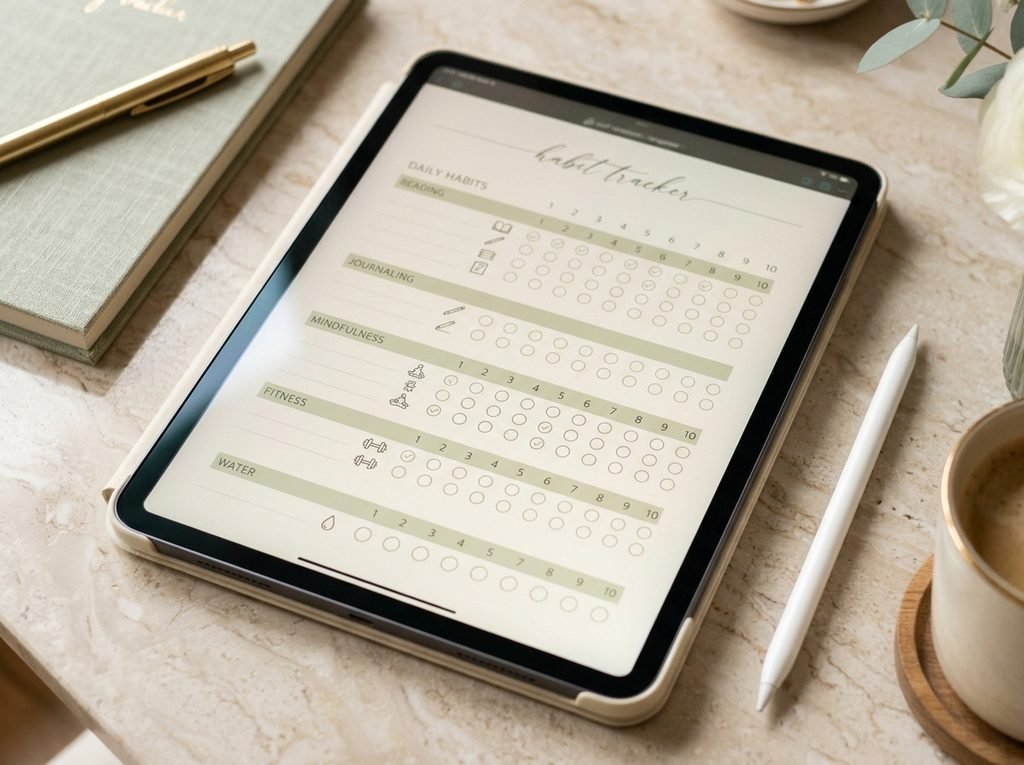
Step 11: Rebuild Your Habit Tracker
A habit tracker can be useful during a routine reset because it turns invisible progress into something you can see.
Start with just five habits.
For example:
| Habit | Mon | Tue | Wed | Thu | Fri |
|---|---|---|---|---|---|
| Plan day | ✓ | ✓ | |||
| Drink water | ✓ | ✓ | |||
| Movement | ✓ | ||||
| Read | ✓ | ||||
| Evening reset | ✓ | ✓ |
Don’t track 20 habits.
Track the behaviors that actually matter.
Step 12: Create a “That Girl” Routine That Is Actually Realistic
The best version of the That Girl lifestyle isn’t perfection.
It’s intentionality.
Your routine could look like:
Morning
☐ Wake up
☐ Hydrate
☐ Make bed
☐ Get ready
☐ Plan priorities
Work/Study
☐ Deep work
☐ Break
☐ Priority task
☐ Lunch
☐ Second focus block
Evening
☐ Tidy space
☐ Self-care
☐ Review day
☐ Plan tomorrow
☐ Wind down
That’s enough.
You don’t need a luxury apartment or a perfect morning aesthetic.
Your version of “That Girl” can simply mean:
organized, intentional, consistent and kind to yourself.
Step 13: Give Yourself a Reset Day
If you’ve been completely out of your routine, dedicate one day to resetting your environment and schedule.
Your reset day could include:
Home Reset
Clean your room.
Change your sheets.
Organize your desk.
Digital Reset
Clear unnecessary notifications.
Organize your files.
Clean your desktop.
Planning Reset
Review appointments.
Write upcoming deadlines.
Choose weekly priorities.
Self-Care Reset
Take a shower.
Do skincare.
Take a walk.
Read.
Rest.
Mindset Reset
Write down what you want the next week to feel like.
Step 14: Plan Your Week Before It Starts
A weekly reset can prevent you from waking up Monday wondering what you’re supposed to do.
Open your digital planner and write:
This Week’s Top 3 Goals
Important Dates
Work/Study Priorities
Personal Priorities
Self-Care
Habits
One Thing I’m Looking Forward To
This creates a simple roadmap.
Step 15: Make Your Routine Flexible
A routine shouldn’t collapse because one thing goes wrong.
If you wake up late, don’t decide:
“Today is ruined.”
Instead:
“What’s the next useful thing I can do?”
Maybe you skip the full morning routine and do the five-minute version.
Maybe your workout becomes a short walk.
Maybe your two-hour work session becomes 45 minutes.
Maybe your evening routine gets shortened.
Flexibility is not failure.
Flexibility is what makes a routine sustainable.
What If You Have Absolutely No Motivation?
This is where many people get stuck.
They wait until they feel motivated before starting.
But motivation isn’t always reliable.
Instead, lower the starting point.
Tell yourself:
“I’ll do this for five minutes.”
Open the document.
Write one sentence.
Put away five things.
Open your planner.
Walk for five minutes.
Wash your face.
Make your bed.
Once you’ve started, continuing often feels easier.
And if you stop after five minutes?
You still kept a promise to yourself.
That’s progress.
The 5-Minute Routine Reset
On your worst days, use this.
Minute 1
Make your bed or clear one surface.
Minute 2
Drink water.
Minute 3
Open your planner.
Minute 4
Write your single most important task.
Minute 5
Start it.
That’s your emergency reset.
You can build from there.
How to Use a Digital Planner for Your Routine Reset
A That Girl digital planner can turn your reset into an organized system.
Consider creating these sections:
Monthly Dashboard
Track your bigger goals.
Weekly Planner
Map out upcoming priorities.
Daily Planner
Create your daily schedule.
Habit Tracker
Monitor your foundation habits.
Self-Care Tracker
Make personal care part of your routine.
Goal Tracker
Connect daily actions to bigger goals.
Reflection Page
Record what’s working.
Brain Dump
Move thoughts out of your head and onto the page.
The goal is to create a planning system you’ll actually use.
Your 7-Day Routine Reset Plan
If 30 days feels overwhelming, start with seven.
Day 1 — Clean Your Space
Reset your bedroom or workspace.
Day 2 — Fix Your Morning
Create a simple morning routine.
Day 3 — Plan Your Day
Use your digital planner.
Day 4 — Focus
Complete one meaningful work block.
Day 5 — Wellness
Add movement and intentional self-care.
Day 6 — Weekly Reset
Review your progress.
Day 7 — Design Next Week
Create a realistic schedule.
Then repeat.
The 3-Level Routine System
One of the best ways to prevent future routine crashes is to create three versions of your day.
Level 1: Low-Energy Day
- Get ready
- Eat
- Hydrate
- Complete one priority
- Basic tidy
- Rest
Level 2: Normal Day
- Morning routine
- Two focus blocks
- Movement
- Self-care
- Evening reset
Level 3: High-Energy Day
- Full morning routine
- Multiple focus blocks
- Exercise
- Creative projects
- Extra organization
- Extended personal goals
This prevents you from thinking your routine only “counts” when you’re having a perfect day.
Don’t Turn Your Planner Into Another To-Do List
This deserves its own reminder.
Your digital planner should reduce mental clutter.
It shouldn’t become a beautiful place where you write 47 tasks you never complete.
Use your planner to answer:
What matters today?
When will I do it?
What can wait?
What do I need to remember?
How am I progressing?
That’s enough.
How to Know Your Routine Is Working
A successful routine isn’t necessarily one where you accomplish more.
Look for signs such as:
- You know what you’re doing next.
- Your mornings feel less chaotic.
- You’re remembering important tasks.
- Your environment feels more manageable.
- You’re making time for yourself.
- You’re following through more consistently.
- You’re recovering faster after an unproductive day.
The real goal is not a perfect schedule.
It’s creating a life that feels easier to navigate.
Frequently Asked Questions
How do I rebuild my daily routine after losing momentum?
Start small. Identify three foundation habits, create a simple morning and evening routine, organize your priorities, and gradually add additional habits as your consistency improves.
How long does it take to rebuild a daily routine?
There isn’t a universal timeline. Give yourself enough time to practice the routine consistently and adjust it based on what actually works in your life.
What should I do if I’ve completely fallen out of my routine?
Start with a reset day. Clean your immediate environment, review your upcoming commitments, choose a few priorities, and create a minimum version of your daily routine.
How can I get motivated to start my routine again?
Don’t wait for motivation. Reduce the task to the smallest possible first step. Opening your planner, making your bed, or working for five minutes can be enough to restart momentum.
What is the easiest routine to start with?
Begin with three anchors: a consistent wake-up period, one important task during the day, and a short evening preparation routine.
Should I wake up at 5 AM to become That Girl?
No. A productive routine doesn’t require a specific wake-up time. Choose a schedule that fits your responsibilities, sleep needs and lifestyle.
How many habits should I track?
Start with approximately three to five meaningful habits. Tracking too many behaviors can make your system unnecessarily complicated.
Is a digital planner good for rebuilding a routine?
It can be. A digital planner can bring your schedule, habits, goals, notes and reflections into one organized system, particularly if you enjoy visual planning.
What if I miss several days again?
Don’t restart from zero. Review what caused the disruption, simplify your routine if necessary, and resume with your minimum routine.
How do I make my routine sustainable?
Make it realistic, leave room for unexpected events, protect rest, avoid excessive habits, and regularly review whether your routine actually fits your life.
Can I create a That Girl routine without spending money?
Absolutely. You can build a routine with a basic notebook, calendar or free planning tools. The aesthetic side is optional; the habits and structure are what matter.
Your Routine Reset Starts With One Small Step
You don’t need to become a completely different person tomorrow.
You don’t need a new personality.
You don’t need a perfect morning.
You don’t need to buy an entire new collection of productivity products.
And you don’t need to wait for Monday.
You need one small action.
Open your planner.
Clear your desk.
Write tomorrow’s top three.
Drink some water.
Set your alarm.
Prepare your clothes.
Start with five minutes.
Then do it again tomorrow.
That’s how momentum comes back.
Not through one dramatic transformation—but through a collection of small promises you repeatedly keep to yourself.
Ready to Enter Your That Girl Reset Era?
Your daily routine becomes much easier to rebuild when your schedule, goals, habits and self-care have one organized home.
That’s where our That Girl Digital Planner can fit into your reset routine.
Use it to create your:
✨ Morning routine
✨ Evening routine
✨ Daily schedule
✨ Weekly reset
✨ Habit tracker
✨ Goal tracker
✨ Self-care routine
✨ Time-blocking system
✨ Gratitude practice
✨ Personal growth plan
Instead of keeping your goals floating around in your head, put them somewhere you can see them.
Make your routine visible. Make your goals actionable. Make your reset intentional.
Start your That Girl era today with a digital planner designed to help you plan, track and organize your everyday life.
Plan it. Track it. Reset it. Become your best version—one day at a time.
Final Reminder
If your routine fell apart, that doesn’t mean you fell apart.
Life changes.
Energy changes.
Priorities change.
And sometimes the routine that worked six months ago simply doesn’t fit anymore.
That’s okay.
You can redesign it.
Start smaller.
Make it flexible.
Keep what works.
Remove what doesn’t.
And give yourself permission to begin again.
Because becoming “That Girl” isn’t about having a flawless life.
It’s about becoming intentional with the life you already have.
✨ About Artisan Anthology
At Artisan Anthology, we curate timeless digital creations designed to inspire and elevate every part of your lifestyle. Our collection includes brand books, digital templates, recipes, ebooks, wardrobe planners, fashion guides, printable wall art, and elegant home décor designs. We also specialize in wedding cards, invitations, baby shower cards, and engagement cards, each crafted to celebrate life’s most meaningful moments.
For professionals and dreamers alike, our CV templates, guided journals, and manifestation planners are created with intention to help you tell your story beautifully and authentically.
✨ Discover our full collection of digital products here → ArtisanAnthology.xyz